

Lead-gen engine — one platform, three consumer brands
A cloneable WordPress lead-generation engine — persistent multi-step quote funnels, fingerprint-based form memory, and a full attribution & compliance stack — reskinned across solar, home improvement, and consumer finance.

- Client
- Confidential — performance-marketing group
- Sector
- Consumer lead generation · Solar, home improvement, consumer finance
- Scope
- Platform engineering · Custom plugins · Brand & conversion design
- Team
- Two engineers — platform, plugins, funnels, brand
- Timeline
- May–July 2023 — engine plus three verticals, in parallel.
The operating client stays unnamed. Screens shown are from the live consumer-facing brands built on the engine.
Discuss your projectPerformance marketing has a rhythm problem: you find a vertical worth testing, and by the time a bespoke site is designed, built, and wired for compliance, the economics have moved. Our client wanted to test consumer verticals the way you test ad creative — quickly, in parallel, without rebuilding the machinery every time.
So we didn’t build them a website. We built them a lead-generation engine — and then stamped three branded businesses out of it.
The engine underneath
The foundation is deliberately boring: WordPress with Astra, Elementor, and Formidable Forms. Boring is the point — any marketer on the team can edit pages and copy without a developer in the loop. The interesting work lives in the custom plugin layer we wrote on top, which turns a page builder into a lead platform:
- Dynamic 5–6-step quote funnels — sliders, selectors, address fields, one question per screen, tuned for paid-traffic conversion
- Persistent form state — a visitor can abandon the funnel and come back weeks later, on the same device, to the exact step they left, with every answer restored
- Partial-lead capture — a lead record is created the moment there’s something worth saving, then continuously updated as the same entry. No duplicates, no lost half-completed forms
- Full attribution on every lead — UTM source, medium, campaign, term, and content ride along from the first click to the final record
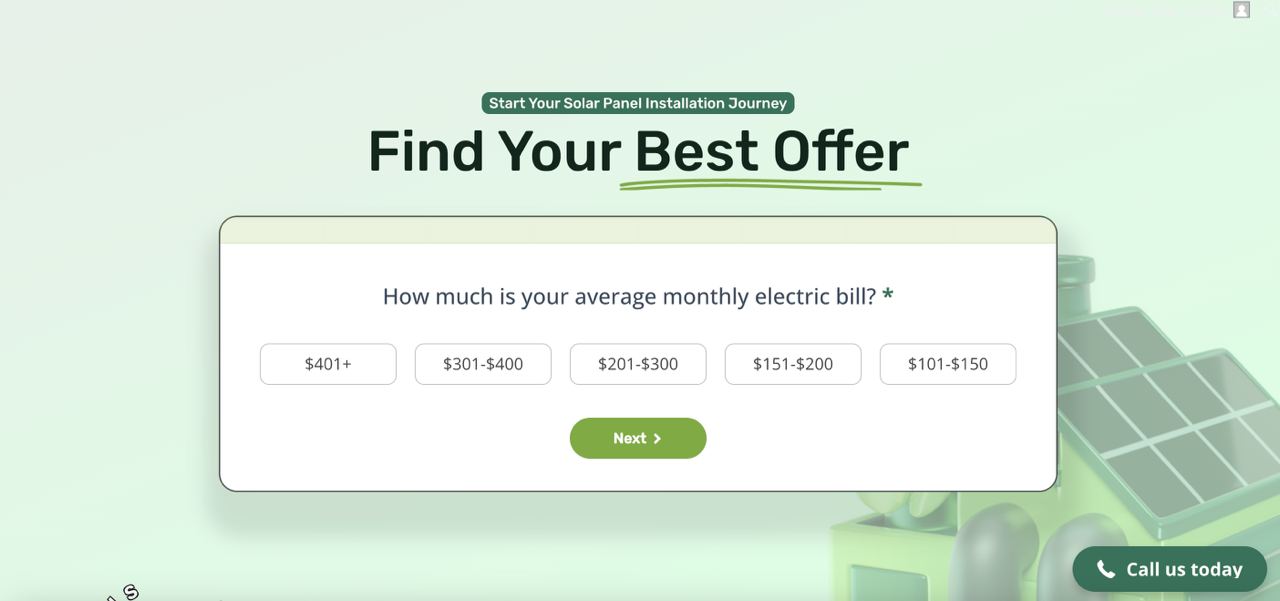 One question per screen — the funnel pattern every brand on the engine inherits
Forms that remember you
The persistence layer was the hardest and most valuable piece. Recognizing a returning visitor by IP is a coin flip, so we combined browser localStorage with a Fingerprint.js-based persistent user identity. A custom “Formidable Memory” system saves every answer continuously, tracks the current step, and syncs to the server through custom REST endpoints — creating the entry early, then updating it in place on every change.
Making that survive a page builder took real engineering: Formidable replaces whole chunks of the DOM as steps load, so the memory layer watches for changes with MutationObserver, re-binds dynamically generated fields, and re-initializes Google Places address autocomplete whenever an address step appears. Edge cases we fought and won: checkbox state restoration, dynamic field names, duplicate submissions, and PHP being printed into JavaScript instead of executing.
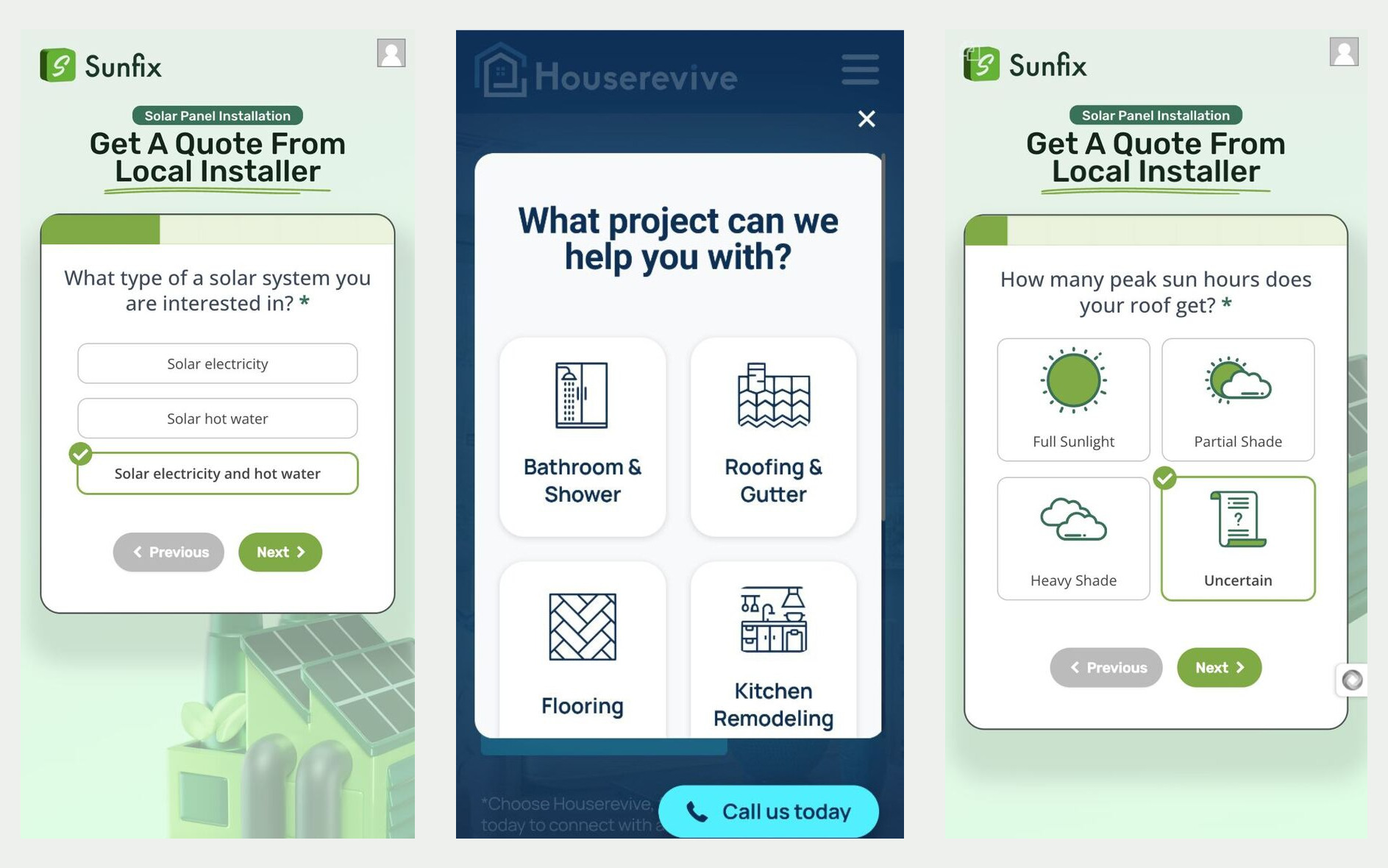 The same funnel engine on mobile, wearing two different brands
Compliance is the product
In regulated consumer verticals, a lead without proof of consent is a liability, not an asset. Every lead the engine produces carries its own paper trail:
- TCPA opt-in language with special handling for the consent checkbox
- Jornaya/LeadiD tokens and TrustedForm certificate URLs captured with the lead
- Consent metadata stored alongside the contact and qualification data
- An opt-out plugin — an email-based form that finds and updates the stored lead, so removal requests actually propagate
- GTM/dataLayer events for every forward and back step and every completed quote, so the funnel can be optimized on real behavioral data
The lead records themselves are rich: ZIP, electric bill, roof shade, utility company, project timeline, preferred call time, full contact details — and we built tooling to pivot Formidable’s meta-table storage into flat, usable lead columns and views for operations.
The plugin layer
Everything portable lives in small, single-purpose plugins that travel with each clone:
- Formidable Memory — persistent steps, partial entries, continuous updates
- User ID Fingerprint — Fingerprint.js-backed persistent visitor identity
- Pass UTM Params — campaign parameters preserved across internal navigation
- Joining Web —
[urlparam]and[ifurlparam]shortcodes for dynamic, conditional page content driven by URL parameters - Formidable Opt Out — self-service removal wired to the stored lead
Brand one: Sunfix — solar quotes
The solar vertical went through a proper naming and identity exploration before landing on Sunfix at solarpanelcost.us.
 From the naming round — “Solar Glow” was a finalist before Sunfix won
Positioning mattered more than the logo. Early copy read like an installer’s website; we rewrote it so Sunfix is clearly a matching service — “Discover and connect with trusted solar panel installers near you” — with four content pillars (consultation, installation, repair & maintenance, financing guidance), honest cost guidance in the $3,500–$35,000 range, and benefit copy grounded in net metering, incentives, and property value. State-specific versions for California and Texas localized the incentives, installer search, and trust sections — treating states the way multilingual sites treat languages.
Sunfix — friendly 3D art direction over the standard engine
A blog engine ships with every clone, feeding organic traffic into the funnel:
 Content pages inherit the brand system too
Brand two: Houserevive — home improvement
Houserevive at repairthehome.us covers five services — roofing, windows, bathroom remodeling, home security, and kitchen remodeling — with the full site around them: process, trust, FAQ, blog, legal, and the quote journey.
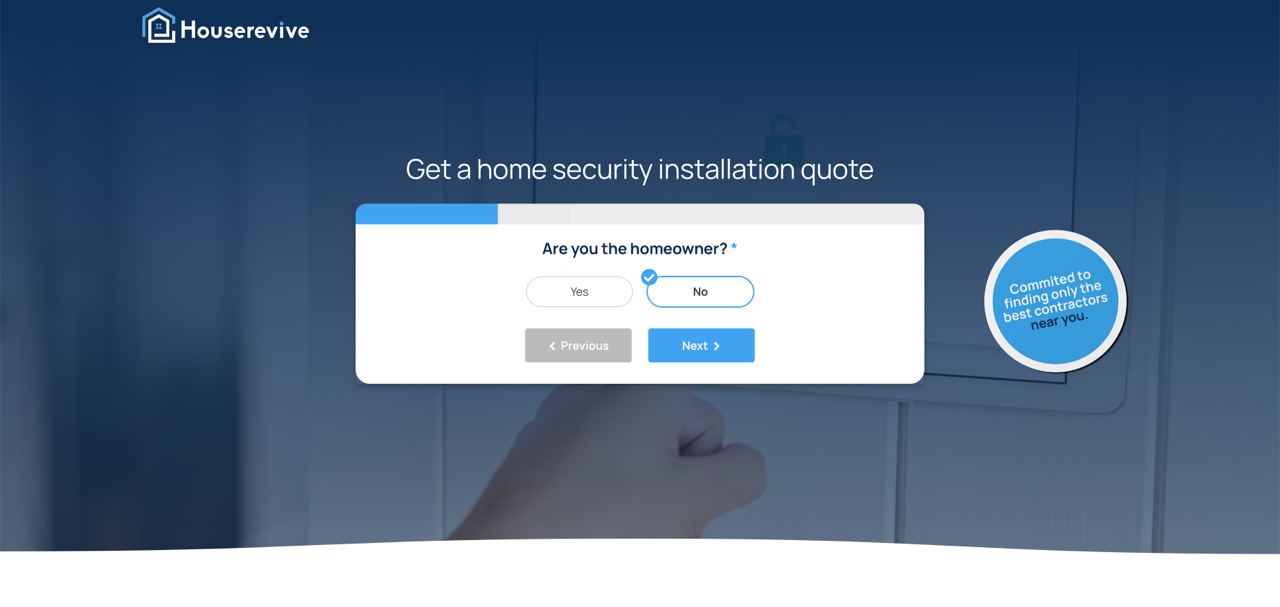 Same engine, navy suit — the Houserevive security funnel
The positioning fix here was the same disease, different patient: the original copy made Houserevive sound like the contractor. We rewrote the whole journey around what it actually does — collects the homeowner’s requirements, matches them with vetted contractors by project type, budget, and location, and lets the homeowner choose. Service copy got real substance: low-E glass and up-to-30% energy savings for windows, 70–80% ROI framing for bathrooms, metal roofing durability, layered security options.
Brand three: PDLoan — consumer finance
The finance vertical is where the compliance architecture earned its keep. PDLoan.us presents loan matching from $100–$5,000 across a lender network — and we structured the entire page as eight “blades”: secure request form, education on how payday loans work, eligibility requirements, APR and repayment disclosures, fee transparency, FAQ, and a security/legal block linking Terms, Lending Policy, Rates & Fees, Privacy, and CCPA.
 PDLoan — the 26-step qualification funnel opens right in the hero
The footer does the legally load-bearing work, positioning PDLoan precisely: not a lender, not an offer to lend, not a credit decision-maker — a matching service that forwards the consumer’s request to a lender network, subject to lender and state-law restrictions.
One network, cross-pollinating
Because the brands share an engine, they also share traffic. A completed Houserevive quote lands on a thank-you page that cross-sells PDLoan for financing the project and Sunfix for solar — turning one acquired visitor into up to three qualified leads.
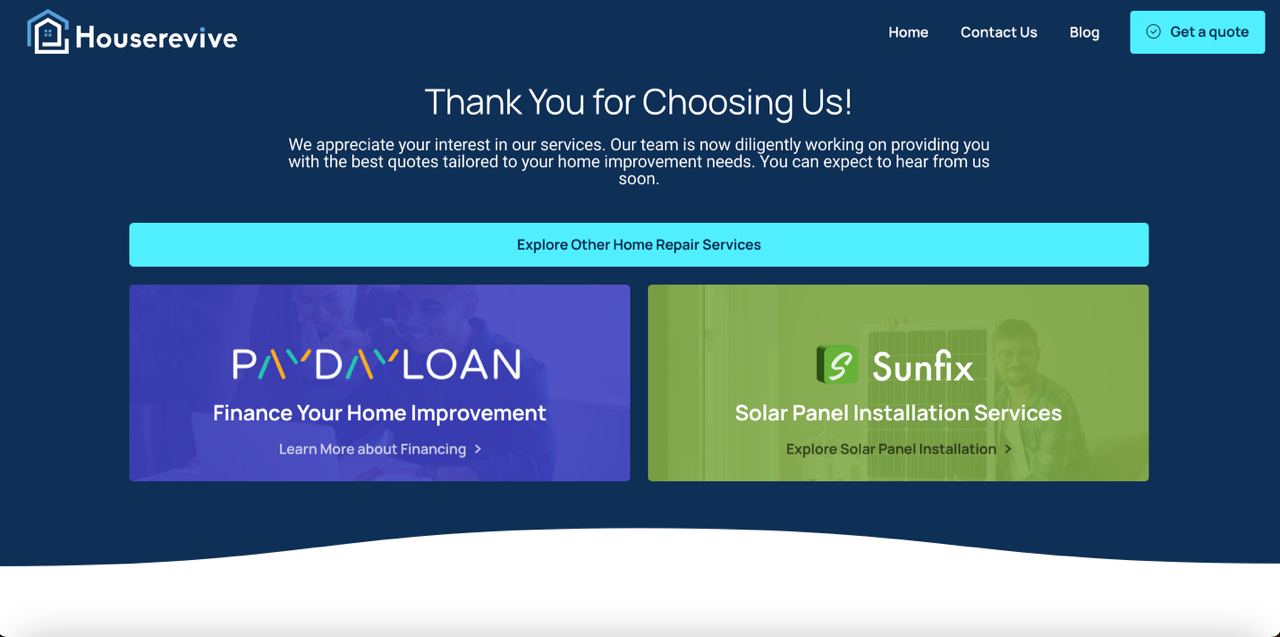 The network effect — one thank-you page, two sibling brands
What shipped
- A documented, cloneable WordPress lead-gen engine — funnels, memory, attribution, compliance — ready to be reskinned for the next vertical
- Five custom plugins covering form persistence, visitor identity, UTM propagation, conditional content, and opt-out
- Three live branded verticals: Sunfix (solar), Houserevive (home improvement), PDLoan (consumer finance)
- State-level localization pattern for geo-specific landing pages
- Compliance capture on every lead: TCPA consent, Jornaya/LeadiD, TrustedForm certificates
Technical stack
- Platform: WordPress · Astra · Elementor · Formidable Forms
- Custom plugins: PHP + JavaScript — Formidable Memory, User ID Fingerprint, Pass UTM Params, Joining Web, Formidable Opt Out
- Identity & persistence: Fingerprint.js, localStorage, custom REST endpoints, MutationObserver-driven re-binding
- Attribution & analytics: UTM capture, GTM/dataLayer funnel events
- Compliance: TCPA opt-in flows, Jornaya/LeadiD, TrustedForm certificates, CCPA-linked legal architecture
- Integrations: Google Places address autocomplete