

AI document-intelligence platform (under NDA)
A multi-app AI platform for document-heavy industries — one shell, one login, a growing family of specialized tools.
- Client
- Confidential — US technology company
- Sector
- Document-heavy industries · AI
- Scope
- Product · Design system · Engineering
- Team
- Compact senior team — product, design, engineering
- Timeline
- Ongoing platform partnership — the suite keeps growing.
The client stays unnamed and brand marks are masked in visuals; all data shown is synthetic demo data. Full case study and live walkthrough available under mutual NDA.
Discuss your projectSome industries still run on paperwork that can hurt people when it’s mishandled — medical records, court filings, insurance claims. Our client serves those industries. What they needed wasn’t “an AI feature”; it was a family of specialized AI tools that feel like one product, hold up under compliance scrutiny, and can be demoed to a skeptical enterprise buyer in minutes.
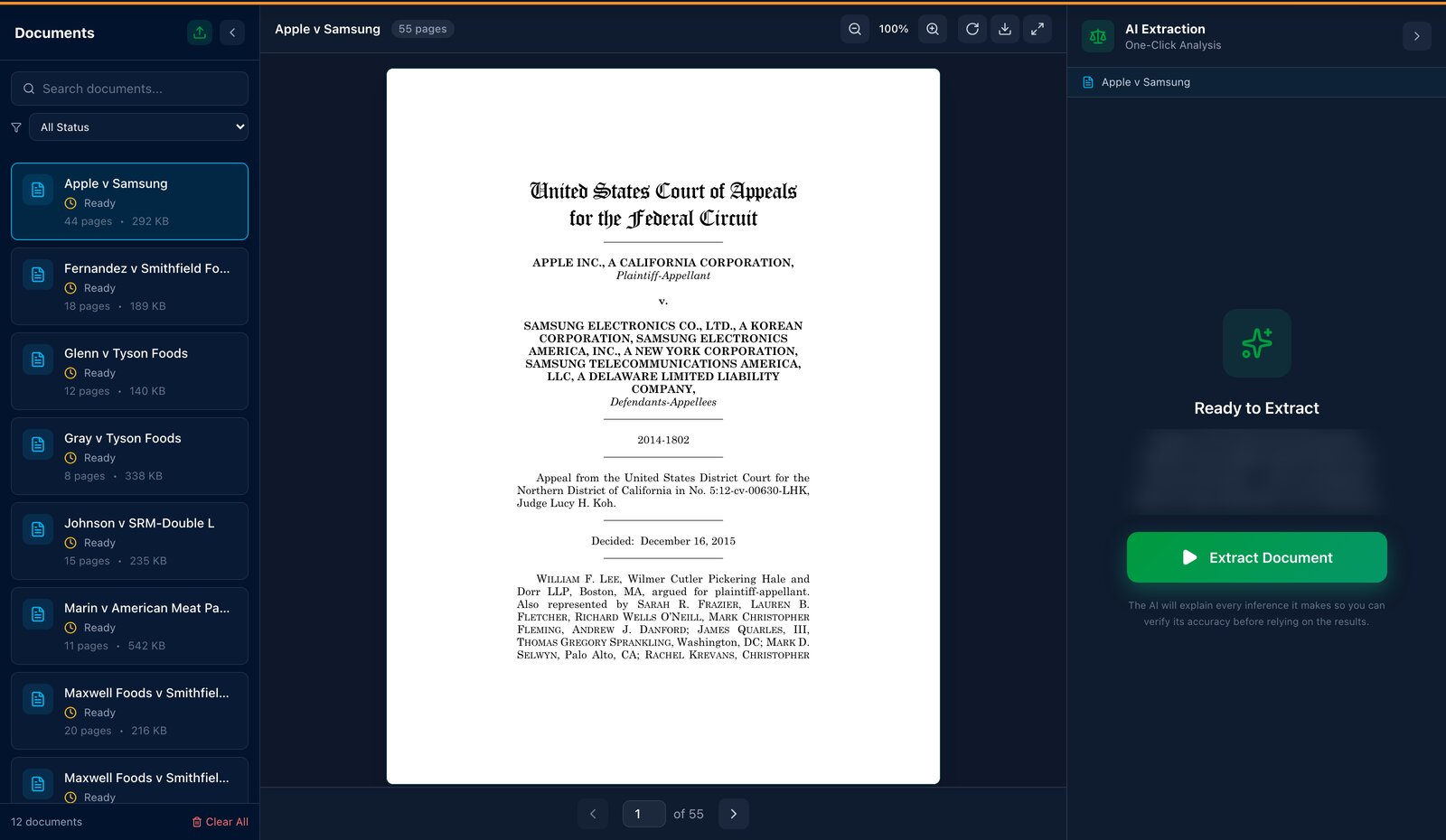
The client stays unnamed and the product wordmarks are masked — but the work itself we can show you. Every screen below is the real product, running on synthetic demo data.
One platform, many sharp tools
The trap with document AI is building one giant app that does everything badly. We went the other way: a platform shell with a growing set of focused applications — each one owning a single job, each one small enough to ship and improve fast.
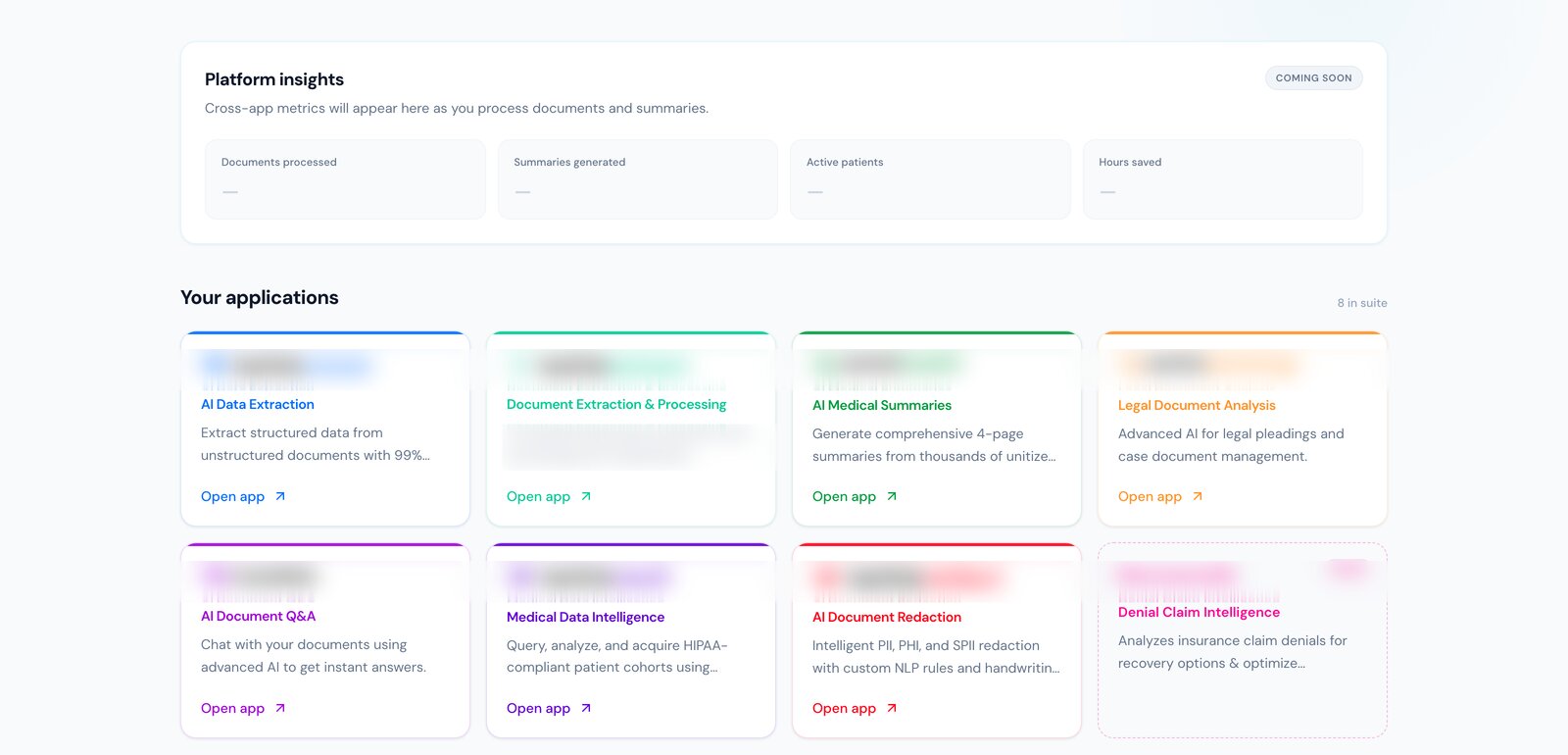 The platform home — one login, a tile per tool, each with its own identity inside a shared system (wordmarks masked)
Every app lives on its own subdomain with its own deploy cadence, but a shared session carries the user across all of them — sign in once, move freely. Under the hood that’s a common auth package every app imports; on the surface it just feels like one product.
A design system that keeps siblings recognizable
Each tool gets its own accent color and wordmark treatment, but navigation, typography, spacing, and interaction patterns are identical across the suite. A user who learns one app has learned them all.
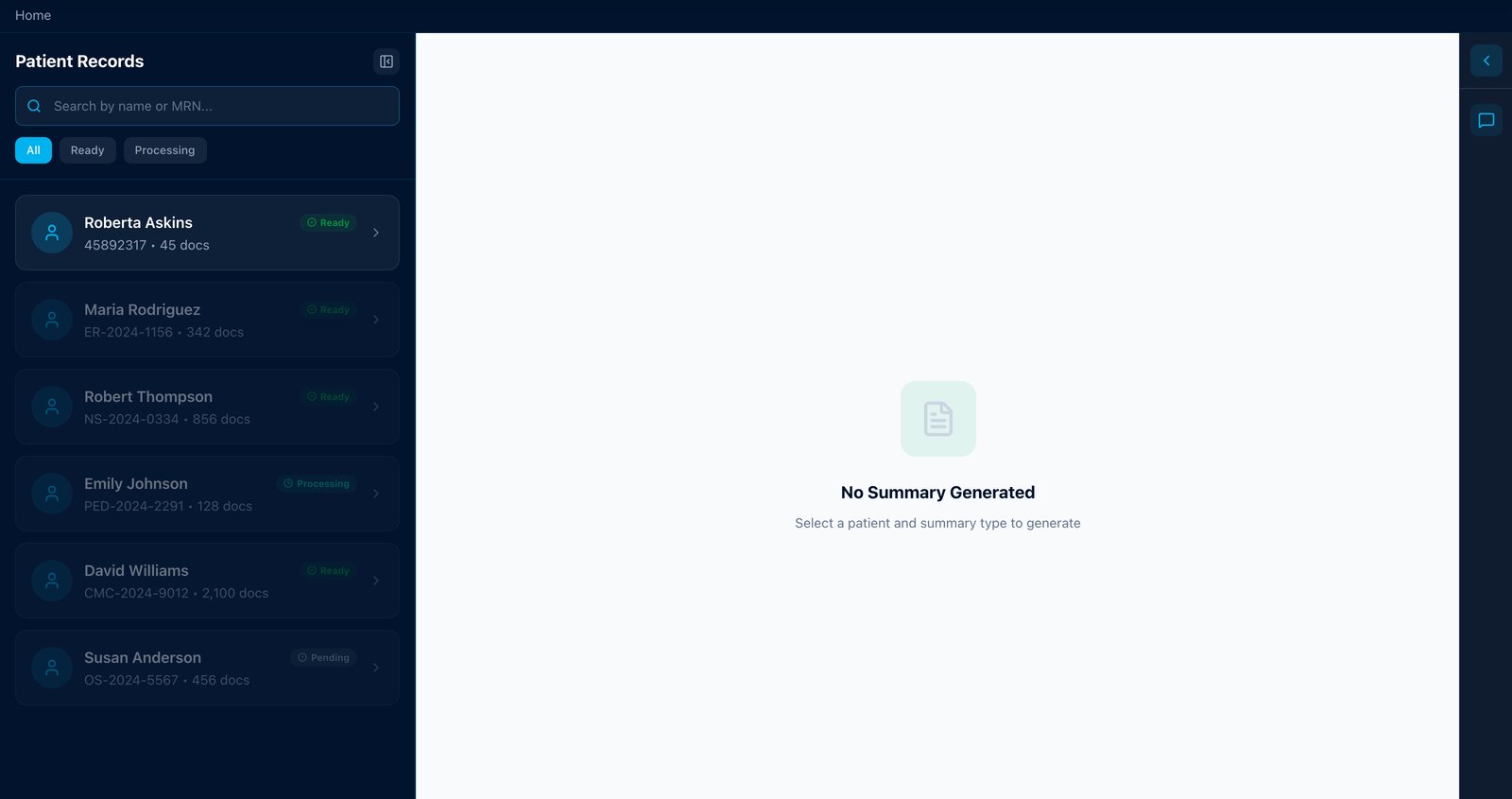 A records workspace — search, processing status, and AI-generated summaries in one view (synthetic demo data)
Dense source documents on the left, one-click AI analysis on the right — public court records as demo content
The design system is a product — and it speaks LLM
None of that consistency is manual discipline. Behind the suite sits a 76-component design system with its own living catalog: every component has a live preview, a props table, an import snippet, and — the part most systems skip — a record of exactly which ad-hoc UI it replaced in which app.
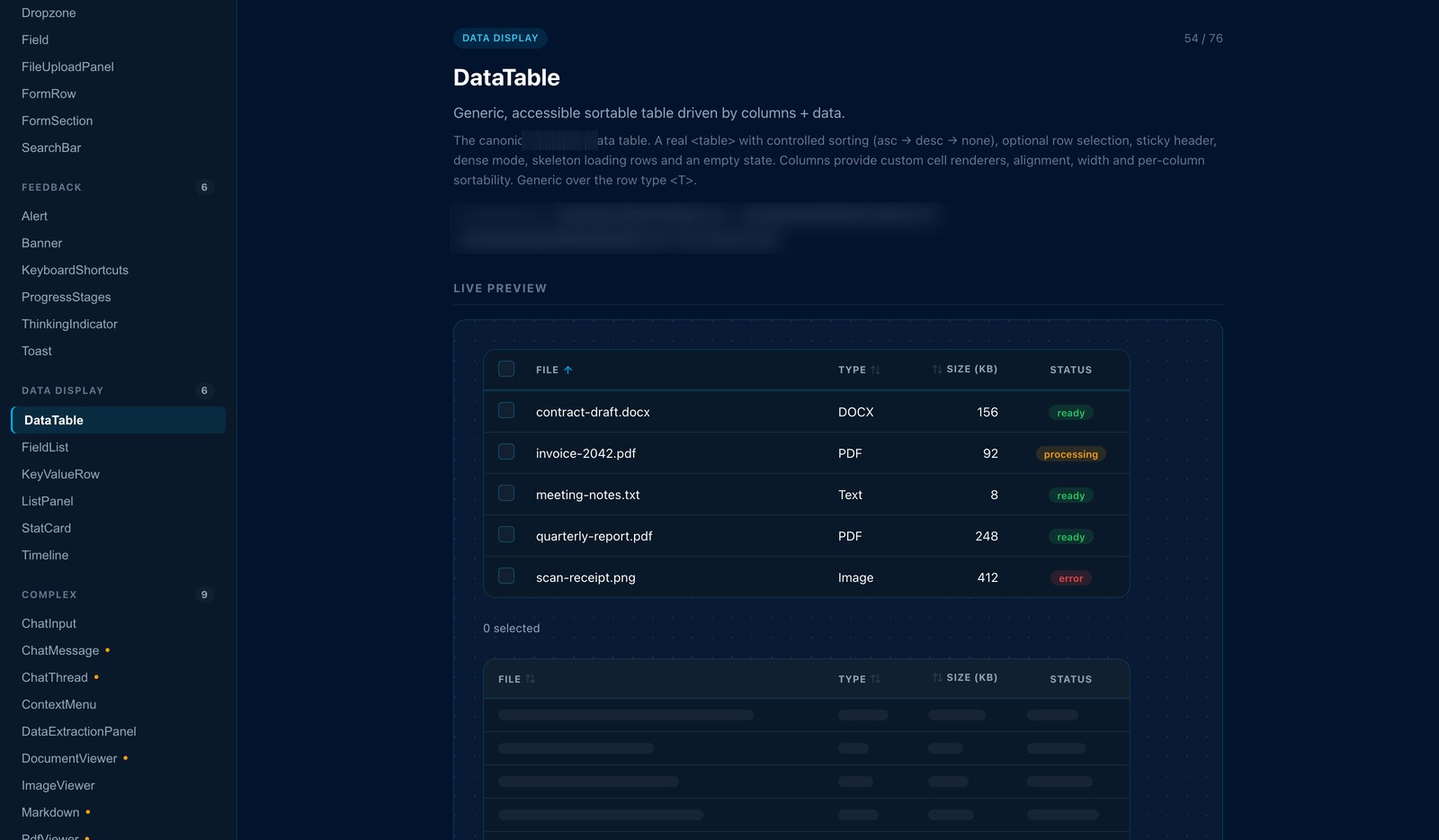 The component catalog — live previews, real props, and a paper trail of what each component standardized (brand masked)
Components are self-contained: styles ship with the library via design tokens, themes are set once per app, and light/dark both come for free. No utility-class soup, no per-app forks.
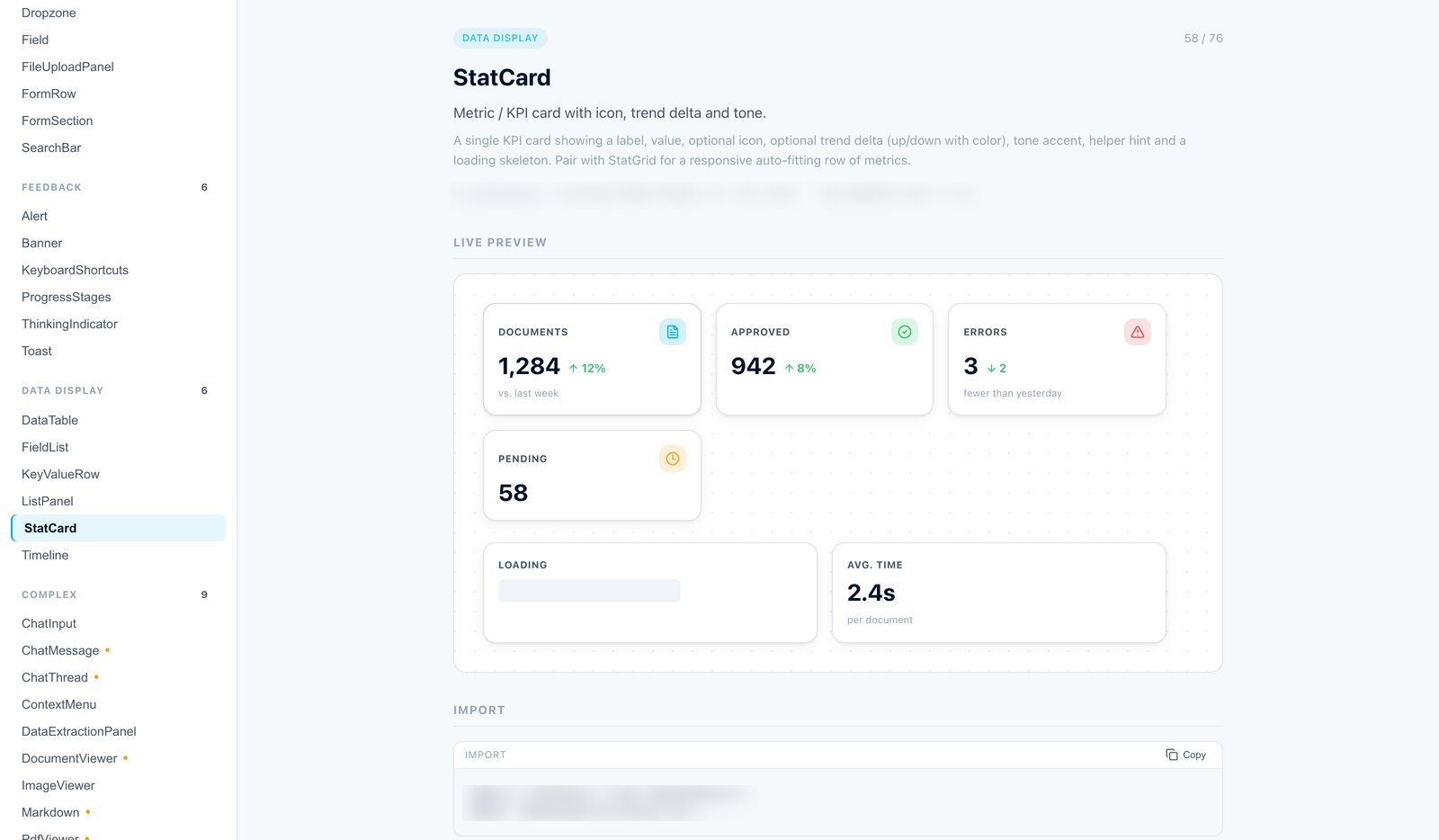 One token layer, two themes — the same components in light mode, with loading and trend states built in (brand masked)
Here’s the twist that makes this system different: it was built to be read by AI coding agents, not just humans. The entire component API is exported as a machine-readable manifest — generated from source, so it can’t drift — and the system ships as an installable AI skill: rules, tokens, patterns, and the manifest, packaged so a coding agent loads it before touching any UI.
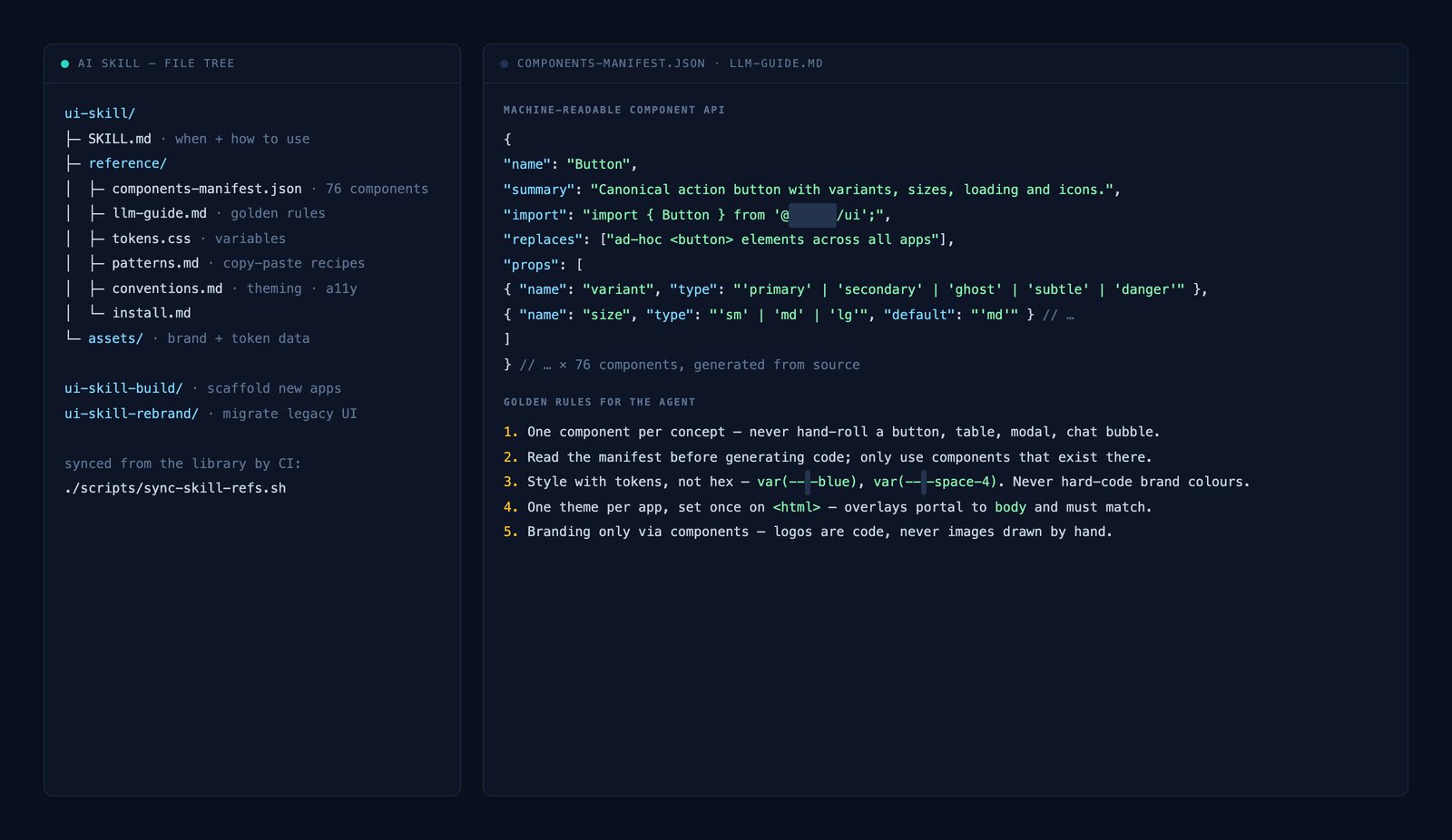 The design system as an AI skill — a machine-readable component manifest plus golden rules an agent follows literally
There are three skills in the family: one that teaches an agent to use the system, one that scaffolds entire new apps from it, and one that rebrands legacy screens — pointing an agent at an old app and getting back on-brand UI built from real components. New product surfaces that used to take a sprint of pixel-pushing now start on-brand by default, whether a human or an agent writes the code.
Built to be demoed, built to be audited
Enterprise AI dies in two places: the demo that needs a VPN and three setup calls, or the security review that finds shortcuts. We designed against both.
- Demo-ready by default — every app ships with realistic synthetic data and a “try it now” path, so a prospect can feel the product in the first meeting
- Compliance as a feature — access logging, audit trails, and de-identification are surfaced in the UI, not buried in a PDF
- Human-verifiable AI — outputs come with step-by-step reasoning a professional can check before relying on them
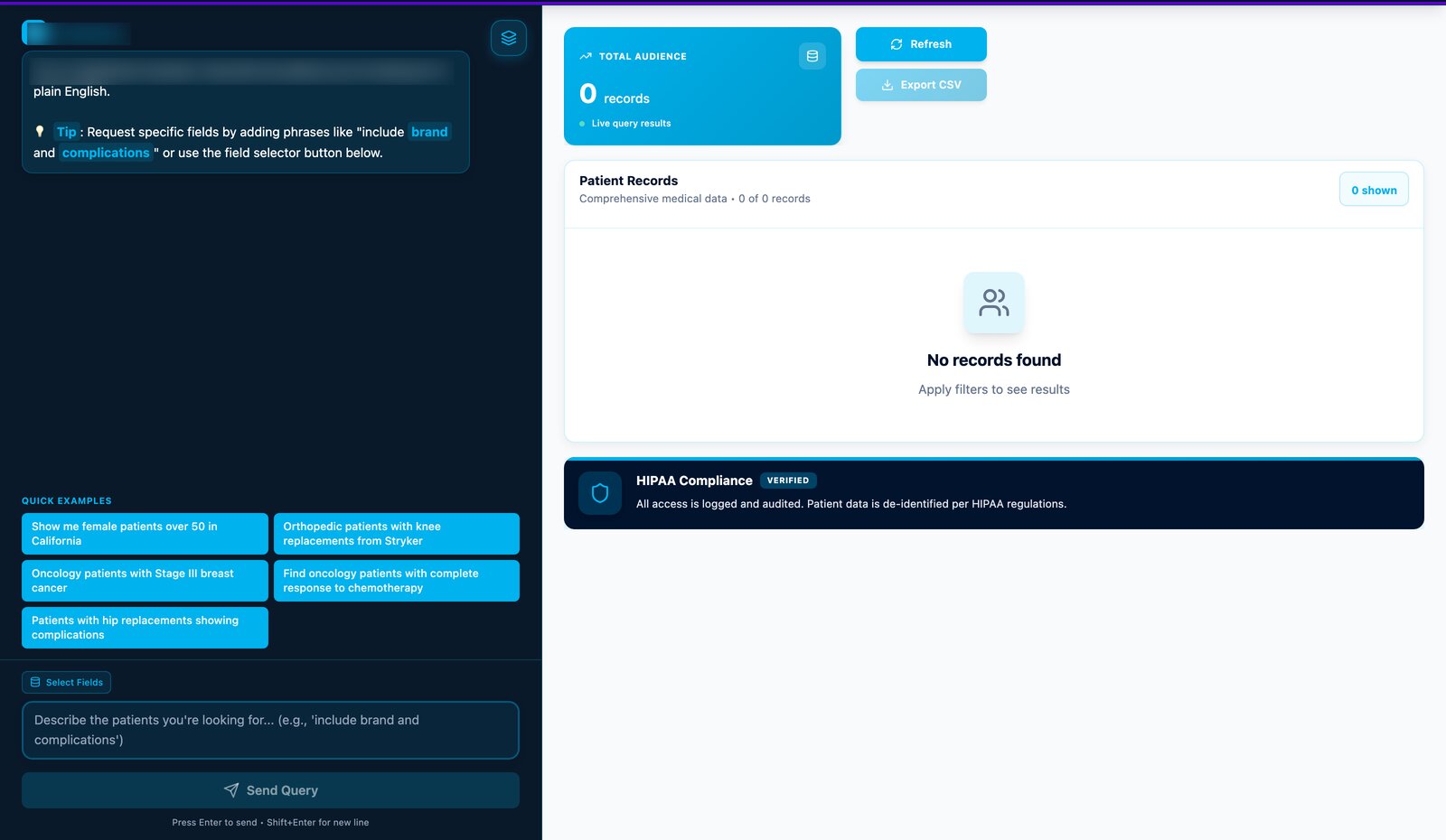 Plain-English querying over sensitive data, with the compliance posture stated right on the screen
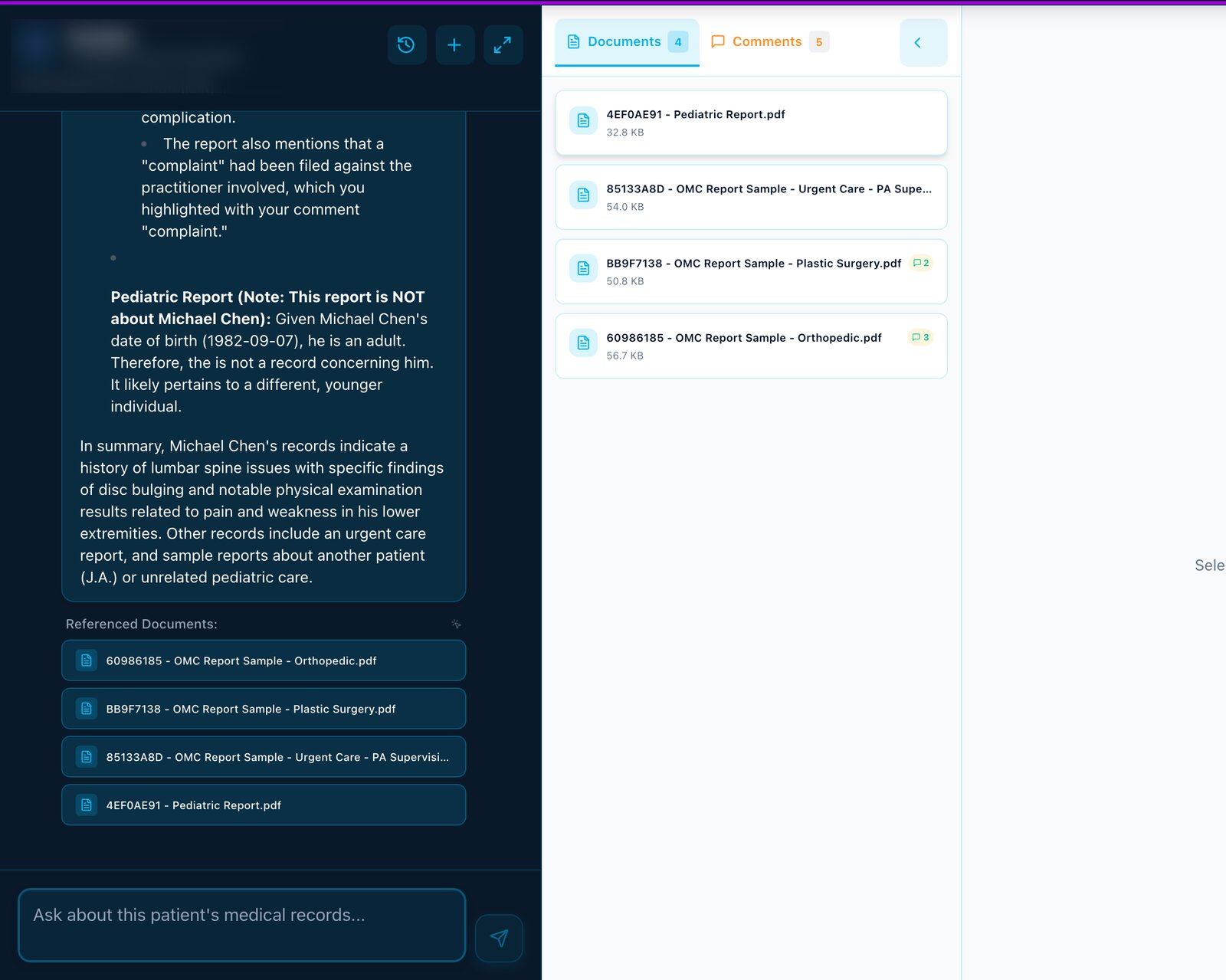 The conversational layer at work — cited answers on the left, the source documents they came from on the right (synthetic demo records)
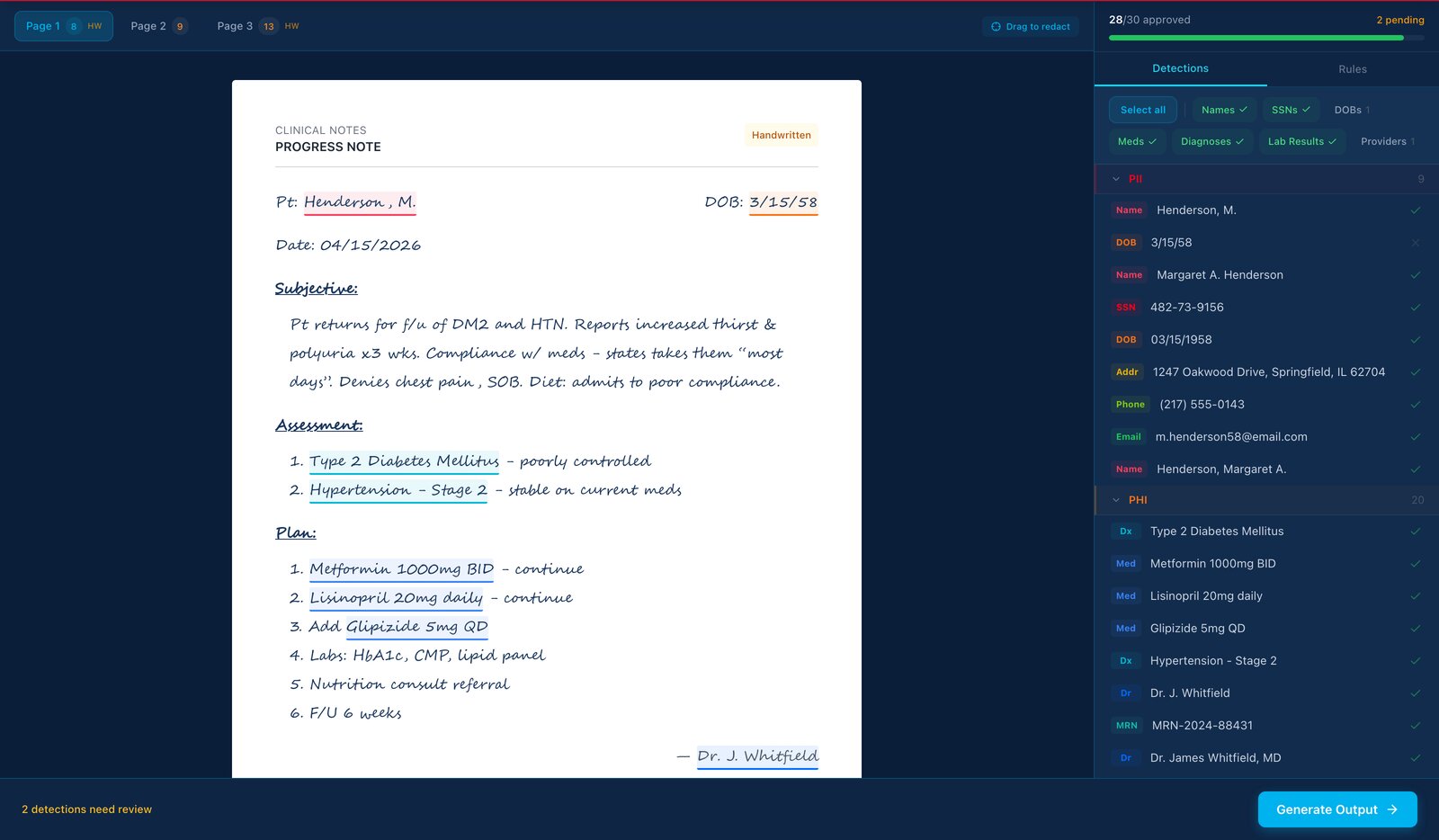 The review step of the redaction pipeline — 30 detections across a handwritten clinical note, each one approvable before output (synthetic demo record)
What shipped
- A platform shell with single sign-on across all application subdomains
- A 76-component design system with a living catalog — one navigation, one component language, per-app identity
- The design system packaged as an installable AI skill: machine-readable component manifest, tokens, golden rules — so coding agents generate and align UI on-brand
- A growing suite of specialized AI document applications: extraction, structured analysis, summarization, natural-language querying, conversational Q&A, and automated redaction of sensitive information
- Synthetic demo datasets and one-click trial flows for every app
- Compliance-aware UX: audit logging, de-identification, and explainable AI output
Where it stands
The platform is live, the suite keeps growing, and new applications now start from a foundation — auth, design system, AI pipeline, demo data — instead of from zero. That’s the real deliverable: the next tool costs a fraction of the first one.
Technical stack
- Frontend: Next.js with TypeScript, one app per subdomain
- Platform: Shared authentication package, cross-subdomain SSO sessions
- AI/ML: Custom document pipeline — OCR, extraction, summarization, redaction, natural-language query
- Design: 76-component design system — token-driven theming, living catalog, machine-readable manifest
- AI-assisted development: design system shipped as AI skills (use / build / rebrand) for coding agents
- Compliance: HIPAA-aligned handling, audit logging, de-identified demo data